.jpg)
 Feb 10, 2026
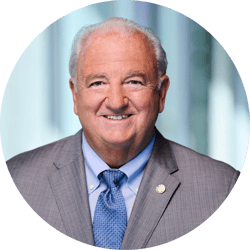
With over 35 years of experience shaping California’s water resources and environmental policy, John Coleman has held senior leadership roles at the East Bay Municipal Utility District, the Association of California Water Agencies, the California Association of Sanitation Agencies, and the Bay Planning Coalition.
A UC Berkeley graduate, he now serves as Senior Policy Analyst and Consultant with BBJ Group, advising clients across California, the U.S., and globally. In 2026, John will deliver the keynote at the American Ground Water Trust’s California Ground Water Conference in Ontario, California, on February 18–19 and moderate a panel at the Urban Water Institute's Spring Meeting in Indian Wells on February 25–27.
Ahead of these events, BBJ Group spoke with John about his journey in the water sector and his perspective on the policy forces shaping California's water future.
BBJ Group: You’ve been in the water business for many decades, as a Director of a major water agency (EBMUD) and President of the Association of California Water Agencies. Tell us more about your background and your experience as a policy expert with a focus on water issues throughout California.
John Coleman (JC): My interest in water policy actually began before my professional career. My initial interest came from my environmental activities as a Boy Scout on the road to becoming an Eagle Scout. While at UC Berkeley, where I studied natural resources, I pursued an independent study focused on environmental law and policy. From there, I dabbled in the field a bit. But it wasn’t until I was elected to the East Bay MUD Board of Directors that I could truly influence policy. I served on that board for about 33 years.
In addition to that, I was President of the Association of California Water Agencies, which represents over 400 agencies in the State of California, serving a two-year term. In addition, I served as President of the California Association of Sanitation Agencies, the “other side of the house," for a one-year term, which I held for two consecutive years while we worked on strategic planning and reorganizing the association.
My involvement with policy therefore dates back to the early 1990s. As a result, I have spoken at numerous conferences and have frequently been interviewed on radio and TV on policy issues primarily related to water. I have really enjoyed this work, as it is critical to the State of California.
BBJ Group: What are the economic impacts on the State of California without securing a safe and clean water supply?
JC: Two things are critical to California’s economy: energy and water, specifically clean water. Without either, the state’s economy, the health of its citizens, and overall well-being would be at a disadvantage. We wouldn’t be the fourth-largest economy in the world without managing these resources effectively.
The economic impacts of water policy are broader than most people realize. For example, driving along Highway 5 or 99, you’ll see signs that say, “It’s our damn water, don’t let it go to the ocean.” About 30% of California’s water comes from snowmelt in the Sierra Nevada Mountains. This snowmelt feeds rivers and tributaries, and much of it is sent to Southern California, agricultural communities, and parts of the Bay Area.
Some of it flows out to the ocean, which frustrates critics. But without this flow, saltwater can intrude as far north as Sacramento, cutting off irrigation for Central Valley crops and putting California’s agriculture at risk. Without snowmelt reaching San Francisco Bay, we couldn’t grow fruits, vegetables, or feed cattle that rely on alfalfa and grasses.
Everything in California is connected to water, and its management directly affects the state’s economy, agriculture, and quality of life.
BBJ Group: Which recent regulatory or legislative developments are having the biggest impact right now on the future of California’s water management?
JC: The most immediate impact comes from tensions over which of the seven states will bear mandatory cuts during shortages. The Bureau of Reclamation is seeking a seven-state agreement by February 14. If no agreement is reached, the Department of the Interior may impose federal, non-voluntary rules.
California, in the Lower Basin with Arizona and Nevada, has already taken significant cuts.
Although California is currently drought-free, another drought will eventually occur. The questions are how severe it will be and how much water will come from the Colorado River. Under the compact, California receives more water than other states. Some negotiations between states will be required, but there are also regional implications. For example, Arizona grows alfalfa in the desert, and much of it is exported abroad. Is that the best use of water? These are the kinds of policy decisions we face in the West.
BBJ Group: What is the role of local, regional, state, and federal approvals and funding?
JC: Approvals and funding are essential to getting projects done, and it ideally starts at the local level. Partners need to support and share the benefits of the project because groundwater storage and desalination are costly.
State funding is critical, but California faces a large deficit. Some water bond money has been approved and spent, but people often ask, “What has actually been built?” If we can’t provide a clear answer, they may not support future water bonds. Unless there is a severe drought, passing a new statewide water bond seems unlikely due to distrust in government and questions about bureaucratic spending.
Federal funding is also unpredictable under the current political climate. This makes flexibility, partnerships, and collaboration essential.
For example, at East Bay MUD, we initially planned to export water from the American River to the East Bay using water rights dating back to World War II. The opposition eventually made the plan unworkable. But during a dinner with Sacramento city and county officials, we developed a joint approach that became the Freeport Regional Water Facilities. The $500 million project was funded through a combination of East Bay MUD and the City and County of Sacramento, which also unlocked federal and state funds. Today, the Freeport project benefits East Bay MUD, Sacramento, and other water agencies, allowing them to move or “wheel” water to where it is needed.
BBJ Group: What are some practical challenges facing California water policy, given the state’s diverse hydrology and political climate?
JC: These challenges have always been part of California’s water future, and they will never go away. The biggest challenge is for everyone to recognize that ignoring these issues could create a disaster that becomes harder to remedy each year.
California can have enough water to meet its demands, but doing so requires more storage, including conjunctive use, a strategy that combines surface water and groundwater, and, where appropriate, off-stream storage. Desalination, conservation, and recycled water also need to be part of the mix.
BBJ Group: What is the future of conjunctive use compared to above-ground storage and desalination? What role does conservation play?
JC: While progress isn’t perfect, California’s overall water consumption has declined. For perspective, during the 1976–77 drought, East Bay MUD served about 1.1 million people using over 250 million gallons per day. In the last drought of the 2000s, the population had grown 25% to 1.4 million, but consumption dropped by 50% thanks to conservation measures and efficiency improvements.
However, water and wastewater systems are designed for full treatment capacity. Heavy conservation underutilizes these facilities, which can drive up rates to cover capital costs. Conservation is part of the solution, but not the only solution.
That’s where conjunctive use and groundwater storage come in. At East Bay MUD, we sampled and analyzed aquifers to test this strategy, proving it can store water with minimal loss. Soil type also matters. Sandy soils can collapse, reducing capacity, while gravel and rock allow recharge and stabilization.
The State Groundwater Management Act, which I helped develop as ACWA President, established structured monitoring and planning. Before this act, California was unique among the 17 western states in lacking structured groundwater management, leaving aquifers vulnerable. Now, groundwater is stabilizing and serves as a backup in droughts. Wet years allow recharge through pumping or flooding fields, which also restores topsoil and aquifers.
Desalination can also contribute. While once criticized for cost and energy use, other countries like Australia, Saudi Arabia, and Israel use wind, wave, and solar energy to power desalination. I recommend a state water bond to fund desalination plants, with local agencies operating them and the state covering capital costs, ensuring water supply in dry years.
BBJ Group: What is the best way to secure an adequate supply of water in California?
JC: I think it’s important to look at water management like a chair with four legs. Some people say the only way to increase our water supply is to build more above-ground storage. That sounds good, but it can only be part of the larger solution.
The four legs I emphasize are:
- Storage (above ground and underground)
- Recycling
- Conservation
- Collaboration
All four are needed to ensure stability, especially during droughts.
The best way to secure water is through honest dialogue. Some hold water rights or have concerns about habitat, which is critical not only for the environment but for the economy. We must break down barriers between the environmental community and water users. There are pragmatic environmental groups working with groundwater basins to make this collaboration possible, which will allow leased groundwater in California to move forward.
In the past, when agencies with differences of opinion came together on a project, the results were impressive. I recall discussions at the state and federal level where people would say, “Wait, you’re working together now? You used to be fighting.” That collaboration made funding and approvals happen much faster, allowing more projects to move forward.
I am not pessimistic about the future of water in California. We need to remove the blinders, ask what’s possible, and combine all approaches, conservation, desalination, and storage, into a coordinated strategy. I believe it can happen, but we must be willing to see things in a new light and approach challenges differently than we have over the years.
BBJ Group: Speaking about your experience and current work in the field, what are some examples of how you’ve assisted organizations or clients with their needs?
JC: That’s a great question, as it makes me think about my experience and what I find exciting. You might say that I help get projects done by getting parties, project proponents and regulatory agencies mostly, to the table to talk and work out their differences. There have been many projects I’ve worked on that involved delays in getting permits approved, or sometimes even reviewed by an overseeing agency.
I’ve never been afraid to get involved (well, I’m asked to get involved!) to help bring these groups together, work through the challenges, and reach solutions that allow projects to be initiated and completed. Issues commonly arise around water resources, water rights, shoreline development, and a wide range of related project types. Over the course of my career, I’ve worked hard to get to know the key players, build relationships, and earn the respect of many parties, including those who are often in opposition.
Maybe that’s the Eagle Scout and Scoutmaster in me, the drive to get projects going and completed as envisioned. I really enjoy finding the link that allows opposing players to work through their issues, shake hands, and agree on moving forward. In my current role with BBJ, this is where I hope to make a difference for many projects that are stalled or encounter challenges in getting started. I like it, it drives me, and I can’t wait to do more.
To continue the conversation on California water policy and its real-world implications, you can reach John at jcoleman@bbjgroup.com. He is available to assist with water resource development, environmental protection, and compliance and permitting challenges.
And if you’re looking for more than just technical insight, don’t hesitate to ask him to share one of his favorite stories from California’s water past!